Dr. Esther Lehman Kawira, MD, FAAFP
Physician • Medical Director • Researcher • Medical Educator • Rural Health Leader
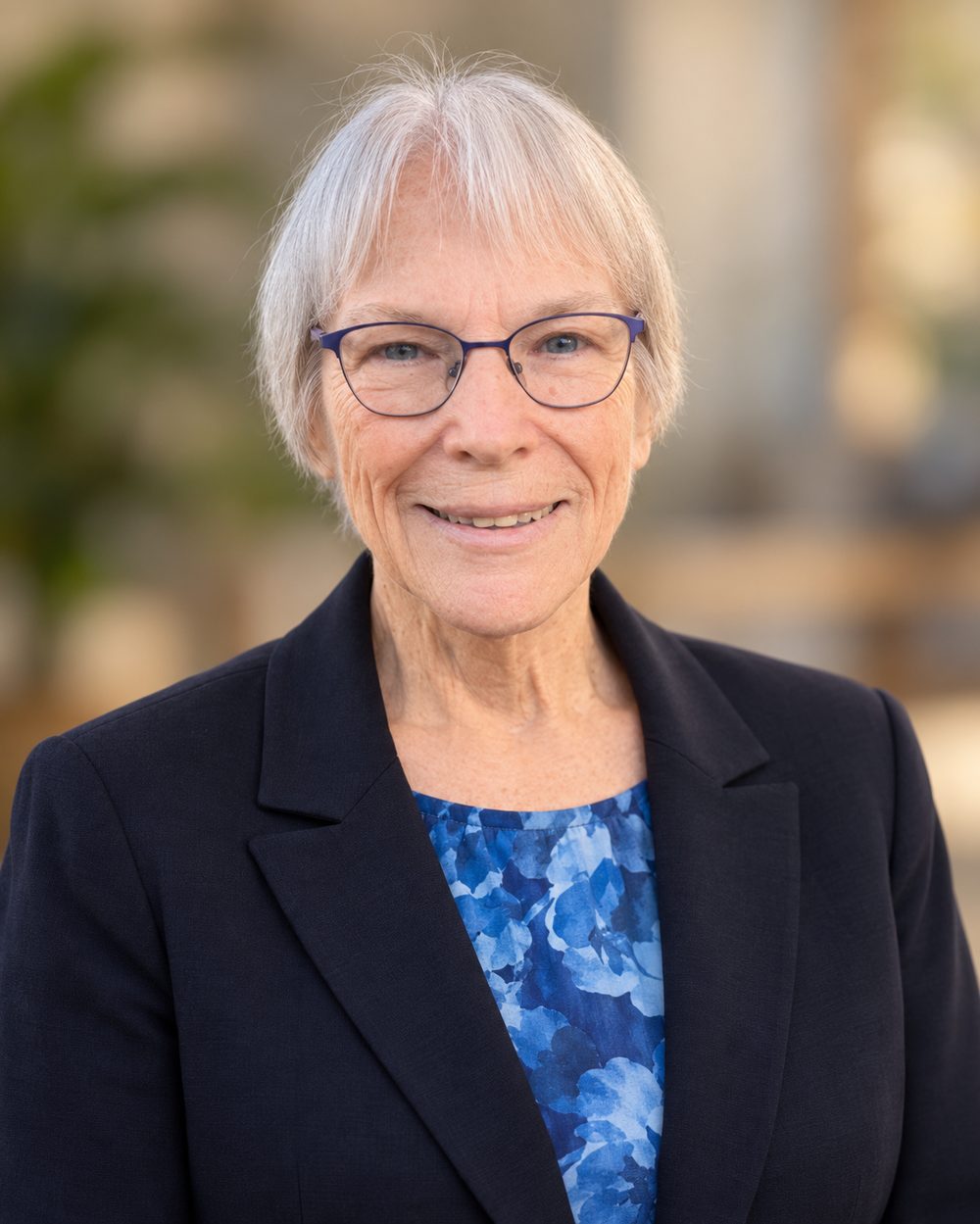
Dr. Esther Lehman Kawira has devoted more than four decades to medicine, medical education, research and community health in northern Tanzania.
Raised in the Mennonite community of Goshen, Indiana, she graduated from Goshen College in 1974 with a B.A. in Natural Science and maintained longstanding ties with College Mennonite Church. After moving to Shirati, Tanzania, in 1983, her medical vocation became closely connected with Kanisa la Mennonite Tanzania (KMT) and Shirati KMT Hospital, creating an enduring link between the Mennonite communities of Goshen and northern Tanzania.
She earned her M.D. from the Indiana University School of Medicine in 1978, completed a residency in family medicine at Memorial Hospital in South Bend, Indiana, and became a Diplomate of the American Board of Family Medicine and a Fellow of the American Academy of Family Physicians. From 1981 to 1983, she completed postdoctoral training in medical genetics and served as an instructor in medical genetics at the University of Notre Dame.
A Life of Service in Shirati
In 1980, Dr. Kawira married Josiah Okeyo Kawira, a native of Shirati, and in 1983 they moved with their young family to Tanzania, where they raised their four children and devoted much of their professional lives to the surrounding communities. Dr. Kawira served for more than two decades at Shirati KMT Hospital, including as Doctor in Charge from 1998 to 2005 and as head of the Shirati Medical Research Center from 1996 to 2006.
As a family physician in a rural setting, she treated children and adults across a wide range of illnesses while training health workers, supervising students, conducting research, and helping connect rural Tanzanian medicine with international medical and academic institutions.
Medical Education
Medical education became a particularly important part of her work. From 1988 to 2006, Dr. Kawira directed the visiting medical student elective at Shirati Hospital, supervising students who came to Tanzania for formal clinical education.
Her academic work included serving as a Clinical Assistant Professor at the University of Southern California Keck School of Medicine beginning in 2006 and as a Clinical Assistant Professor at Touro University California beginning in 2010, where she also served as a Global Health preceptor. She additionally served as volunteer faculty for the University of Cincinnati College of Medicine, working directly with fourth-year medical students during Global Health experiences in Tanzania and participating in their clinical evaluations.
Dr. Kawira and SHED also hosted and supported students and faculty from other institutions, including the James Madison University School of Nursing. Through these programs, generations of medical, nursing, physician-assistant, and other health-professions students received academic and clinical training in Shirati while learning directly from Tanzanian physicians, health workers, patients, and communities.
SHED Foundation and Rural Health
In the mid-2000s, Dr. Kawira joined other local leaders in establishing the Shirati Health, Education and Development Foundation (SHED Foundation). When SHED formally began operations in 2006, she became its Medical Director and helped build its health programs, including Sota Health Clinic, which began in rented premises before moving into a permanent SHED facility near Magamaga in 2013.
Her work through SHED extended well beyond clinic-based medicine to rural medical outreach, maternal and child health, medical education, professional training, public-health initiatives, research, sickle cell disease programs, and partnerships with universities, hospitals, nonprofit organizations, researchers, donors, and health professionals in Tanzania and abroad.
For Dr. Kawira, health has always been inseparable from community development: clean water, nutrition, education, trained health professionals, accessible facilities, and strong local institutions all influence whether families can live healthy and productive lives.
Village Life Outreach Project
One of SHED’s most important long-term partnerships has been with Village Life Outreach Project (VLOP) in Cincinnati, Ohio. Dr. Kawira played an important role in the early relationship that led to Village Life’s continuing work in northern Tanzania and became a physician, mentor, and local partner connecting its Cincinnati community with communities around Shirati.
That partnership grew to encompass health, education, water, infrastructure, and community-development projects, including work associated with Roche Health Center. Village Life later recognized Dr. Kawira in Cincinnati for her longstanding service, partnership, and contributions to the communities the organizations served (recognition video).
See also the Village Life Outreach Project page.
Burkitt Lymphoma, EMBLEM and Medical Research
A major focus of Dr. Kawira’s clinical and scientific career has been Burkitt lymphoma, an aggressive childhood cancer occurring with unusually high frequency in equatorial Africa. After years of treating children with Burkitt lymphoma in northern Tanzania, she became the Principal Investigator for Tanzania for the Epidemiology of Burkitt Lymphoma in East African Children and Minors (EMBLEM) Study, a multinational research initiative supported by the U.S. National Cancer Institute and National Institutes of Health.
Working with clinicians and researchers in Tanzania, Kenya, Uganda, and the United States, she helped connect rural patient care with international research into the epidemiological, infectious, environmental, immunological, and genetic factors associated with Burkitt lymphoma. SHED Foundation served as an important local platform for the Tanzanian component of EMBLEM, and Dr. Kawira also served as an editor of the EMBLEM Newsletter. The National Cancer Institute’s complete EMBLEM newsletter archive is available at emblem.cancer.gov, and the April 2011 issue introducing Dr. Esther Lehman Kawira as Principal Investigator for EMBLEM Tanzania is available here (PDF).
Dr. Kawira has authored and co-authored scientific research in medical genetics, Burkitt lymphoma, cancer epidemiology, infectious disease, malaria, and medicine in East Africa. Her work has consistently joined scientific investigation with the practical perspective of a physician caring for the populations being studied — asking not only why particular diseases occur, but how research can improve prevention, diagnosis, and treatment. Her publications and research collaborations can be viewed through ResearchGate.
See also the EMBLEM Study page.
Recognition, Service and Legacy
In 2014, Goshen College honored Dr. Kawira with its Culture for Service Award, recognizing her decades of medicine, research, teaching, and community service in Tanzania (award announcement).
Her personal experience as both physician and patient has also been shared publicly. The Fasting Method published a feature on Dr. Kawira’s own health journey, including another remarkable part of her life — her having climbed Mount Kilimanjaro three times (physician success story).
Dr. Kawira’s contribution is larger than any single clinic, university appointment, research study, or development project. From her arrival in Shirati in 1983 through more than four decades of work in northern Tanzania, patients she first treated as a young physician became parents and grandparents, students became doctors and long-term collaborators, and individual projects developed into lasting clinics, research programs, educational exchanges, and institutional partnerships. She helped establish a model in which clinical medicine, scientific research, education, community development, faith-inspired service, and international partnership reinforce one another.
Her life and work created enduring bridges between Goshen and Shirati, between Tanzania and American universities, and between Shirati and Cincinnati through Village Life Outreach Project — relationships that continue to influence SHED Foundation and the communities it serves.
Selected Career Highlights
- Goshen College, B.A. Natural Science, 1974
- M.D., Indiana University School of Medicine, 1978
- Family Medicine Residency, Memorial Hospital, South Bend
- Co-Chief Resident, 1980–1981
- Diplomate, American Board of Family Medicine
- Fellow, American Academy of Family Physicians (FAAFP)
- Postdoctoral training in Medical Genetics
- Instructor in Medical Genetics, University of Notre Dame, 1981–1983
- Medical service in Shirati, Tanzania beginning in 1983
- Director of visiting medical student elective, Shirati Hospital, 1988–2006
- Head, Shirati Medical Research Center, 1996–2006
- Doctor in Charge, Shirati Hospital, 1998–2005
- Medical Director, SHED Foundation
- Doctor in Charge, Sota Health Clinic
- Clinical Assistant Professor, USC Keck School of Medicine
- Clinical Assistant Professor and Global Health preceptor, Touro University California
- Volunteer faculty, University of Cincinnati College of Medicine
- Educator and host for visiting university medical and health-professions programs
- Principal Investigator for Tanzania, EMBLEM Study
- Editor, EMBLEM Newsletter
- Author and co-author of medical and scientific research
- Goshen College Culture for Service Award, 2014
- Recognized by Village Life Outreach Project in Cincinnati for longstanding service and partnership